Beyond Panama City: The Rise of Lifestyle-Driven Investment
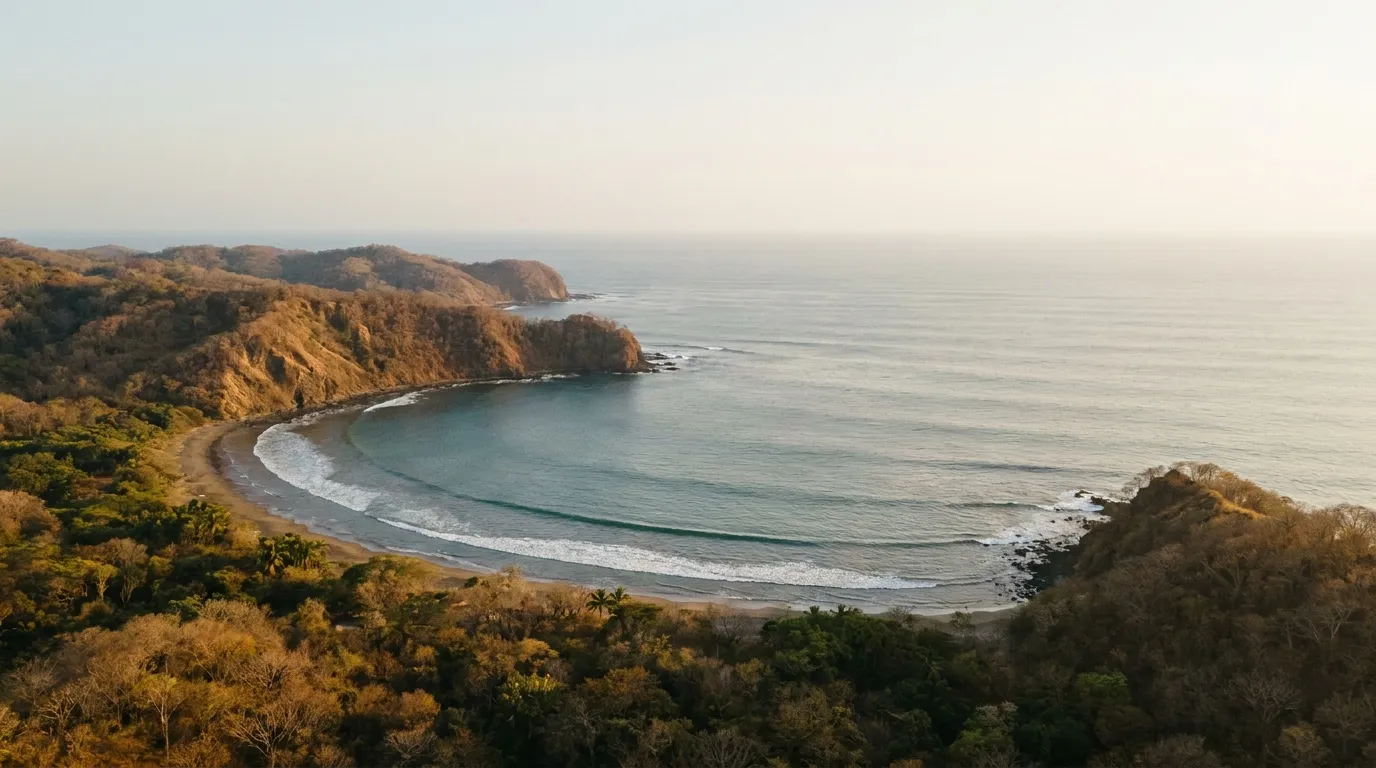
Why more buyers are trading the bay-view tower for a bay with an ocean view.
For thirty years, "buying real estate in Panama" meant Panama City. Punta Pacífica, Costa del Este, Avenida Balboa, the towers along Coastal Strip. The deal was simple: dollar economy, rising skyline, expat-friendly demographics, predictable cap rates.
That deal is still good. But something interesting is happening in parallel: a growing share of the foreign capital coming into Panama is choosing lifestyle-driven secondary markets instead of, or alongside, the city.
This isn't speculative. It's a structural shift in what foreign buyers want from international real estate.
The shift, in one sentence
International buyers are increasingly less interested in yield only and more interested in yield plus a life.
A 7% cap rate in Costa del Este still works on a spreadsheet. But if you've already done that math, the next question is: "where do I actually want to spend my Februaries?"
That question is what's filling lots in Playa Venao, condos in Boquete, and overwater bungalows in Bocas del Toro.
Why the secondary markets are catching up
Three forces are compounding:
Remote work normalized the location decision. Buyers no longer have to live where their salary lives. A 3-hour drive from Tocumen is now a viable home base for a senior tech worker, a consultant, or a founder, in a way it wasn't in 2018.
Infrastructure caught up. Fiber internet in Playa Venao. Paved roads through Azuero. A small but functional airport in Pedasí. Cellular coverage that handles a video call without negotiation.
Schools changed the calculus for families. When Playa Venao went from "great surf trip" to "place where my kids can go to school," the buyer base widened by an order of magnitude. We've written separately about the international school landscape in Venao.
What lifestyle-driven actually means in practice
It means a property choice optimized for how you'll actually live, not just how it shows up on a P&L.
It means accepting a slightly lower cap rate in exchange for the property being a place you genuinely want to spend three months a year, which often becomes six.
It means owning in a market whose supply is bound by geography (a bay only fits so many buildings) rather than by zoning (which can always be changed).
It means betting on demand from buyers who care about waves, walking distance to a coffee shop, school proximity, surf school proximity, demand that turns out to be less elastic than people assume.
The numbers that show it's working
We're seeing two patterns repeat:
Multi-property buyers. Foreign families increasingly own one urban condo (Panama City or Casco Viejo) and one beach or mountain property (Venao, Pedasí, Bocas, Boquete). Each property earns differently. Combined, they hedge each other.
Convert-to-primary stories. Buyers who bought in 2018 or 2020 as second homes are converting to primary residence. Their kids are at the local international school. They keep the city condo as their long-term rental. The "secondary" property became the main address.
How to think about it for yourself
If you're considering Panama for the first time, we'd ask one question before suggesting any specific market: how many weeks a year are you really going to be there?
If it's 4–6, an income property in Panama City probably wins. If it's 12+, lifestyle-driven secondary almost always outperforms over a 10-year hold, both in lived experience and in net wealth, because you stop spending on hotels and start owning the visit.
Most of our buyers, once we sit down with them, end up doing both. That's also fine.
If you want to think through it for your specific situation, the first call is on us.