
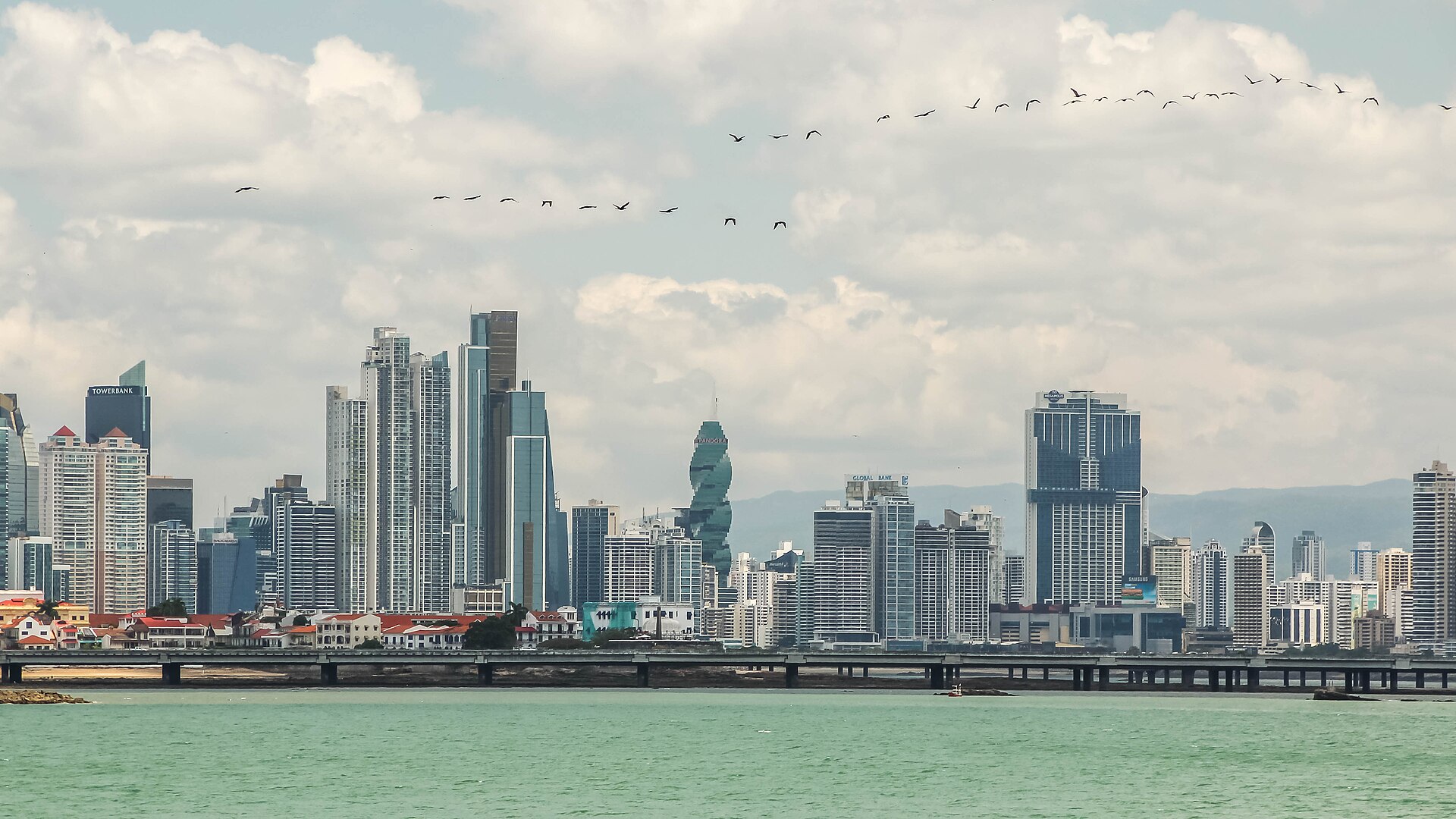
Why Panama Feels Stable in an Uncertain World
It's not an accident. It's the sum of hard currency, an economy tied to global trade, and a middle class that keeps growing.
A lot of capital is moving right now. Latin Americans diversifying away from political volatility. North Americans hedging against inflation. Europeans looking for a base that's friendly to outsiders.
Most of these buyers eventually shortlist Panama. Some buy. The ones who buy almost always cite the same word: stability.
That word means something specific here. Let's unpack it honestly.
A currency that doesn't move
Panama's economy is dollarized. The Balboa exists as a nominal unit, but in practice every contract, salary, and price is denominated in US dollars.
This means no currency crisis is possible in the way it's possible in Argentina, Venezuela, or Turkey. No central bank can print Balboas to monetize debt. There's no central bank in the usual sense.
For a buyer, that translates to one thing: the property you bought in USD will close, sell, and rent in USD for the next 30 years.
An economy tied to global trade, not domestic politics
The Panama Canal carries roughly 6% of world maritime trade. The Colon Free Zone, the second largest in the world, handles billions in re-exports annually. The banking sector serves regional, not just domestic, clients.
This means the Panamanian economy is structurally less dependent on the political mood of any given government. The country can have a noisy election cycle without that noise translating into capital controls or currency devaluation.
A consistent legal framework for foreign buyers
Foreigners can own real estate in Panama under the same legal terms as Panamanian citizens. There are limited exceptions for properties within 10 km of a land border, but these don't affect any of the markets we work in.
Property titles are clean, recorded, and searchable. Closings happen at notaries with attorneys representing both sides. The system isn't fast, but it is predictable.
A middle class that's growing
This is the part of the stability story that often gets missed.
Panama has been steadily building a service economy and a middle class for two decades. New restaurants, gyms, coffee shops, and private schools open continuously in Panama City and increasingly in secondary markets. Local demand for housing isn't speculative, it's structural.
A foreign buyer entering Panama isn't betting only on more foreign buyers. They're entering a country whose own residents are actively buying real estate, eating out, and traveling.
What "stable" doesn't mean
Stable doesn't mean nothing changes. Panama goes through political cycles, infrastructure debates, and tax reform conversations like any other country. Bureaucracy is real. Some closings take longer than they should.
What stable does mean is that the base case is predictable. You can model a 10-year hold without rebuilding your assumptions every time there's a headline.
That's rarer than it sounds.
If you're thinking about Panama as part of a broader diversification, we'd be glad to talk through how the pieces fit your specific situation. The first conversation is always free, and never pushy.